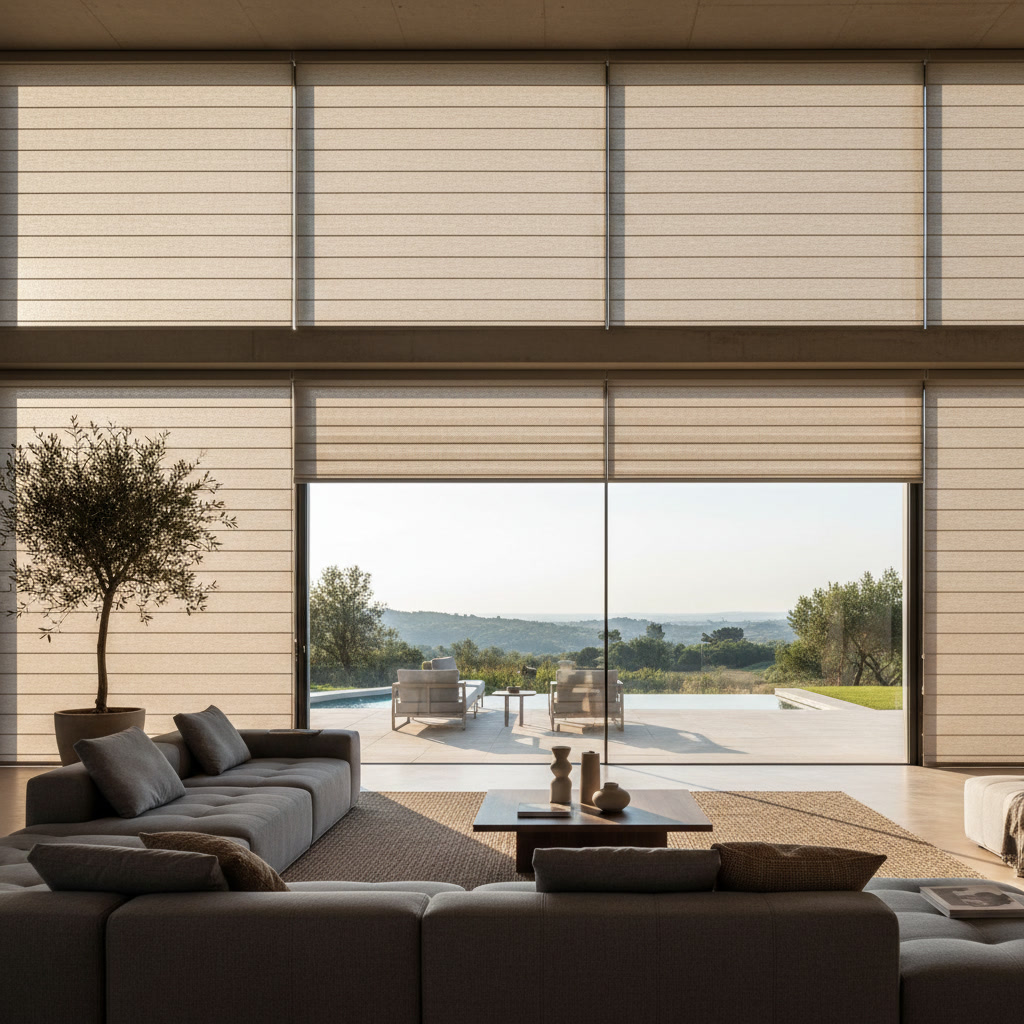
Large expanses of glass define modern Arizona homes, offering stunning desert views and natural light. But when those floor-to-ceiling windows or 12-foot sliding doors need coverage, manual shades become impractical, heavy, and frustrating. Motorized shades large windows demand specialized engineering, robust motors, and careful planning to function reliably for years.
This guide covers the technical requirements, motor specifications, control options, and installation considerations that separate successful large-window automation projects from costly disappointments. Whether you’re outfitting a Sun City home with panoramic views or a Scottsdale property with expansive glass walls, understanding these fundamentals ensures your investment delivers both function and longevity.
Why Large Windows Require Different Motorized Solutions
Standard motorized shade motors handle fabric rolls up to about 50 pounds and widths around eight feet. Beyond those thresholds, physics demands different engineering. A 14-foot sliding glass door with blackout fabric can weigh 80 pounds or more, requiring motors with significantly higher torque ratings and reinforced mounting hardware.
The larger the window, the more critical proper motor selection becomes. Undersized motors burn out prematurely, create noise, and fail to lift fabric evenly. Oversized motors waste energy and cost unnecessarily. Large format installations demand precision matching between shade weight, fabric type, window dimensions, and motor specifications.
Wind load also becomes a factor for sliding doors and windows exceeding ten feet in width. Arizona’s monsoon winds create pressure differentials that push and pull fabric, stressing motors and mounting points. Outdoor-rated motorized shades for patios and covered terraces require even more robust specifications to handle exposure and temperature swings.
Motor Types and Torque Requirements for Large Openings
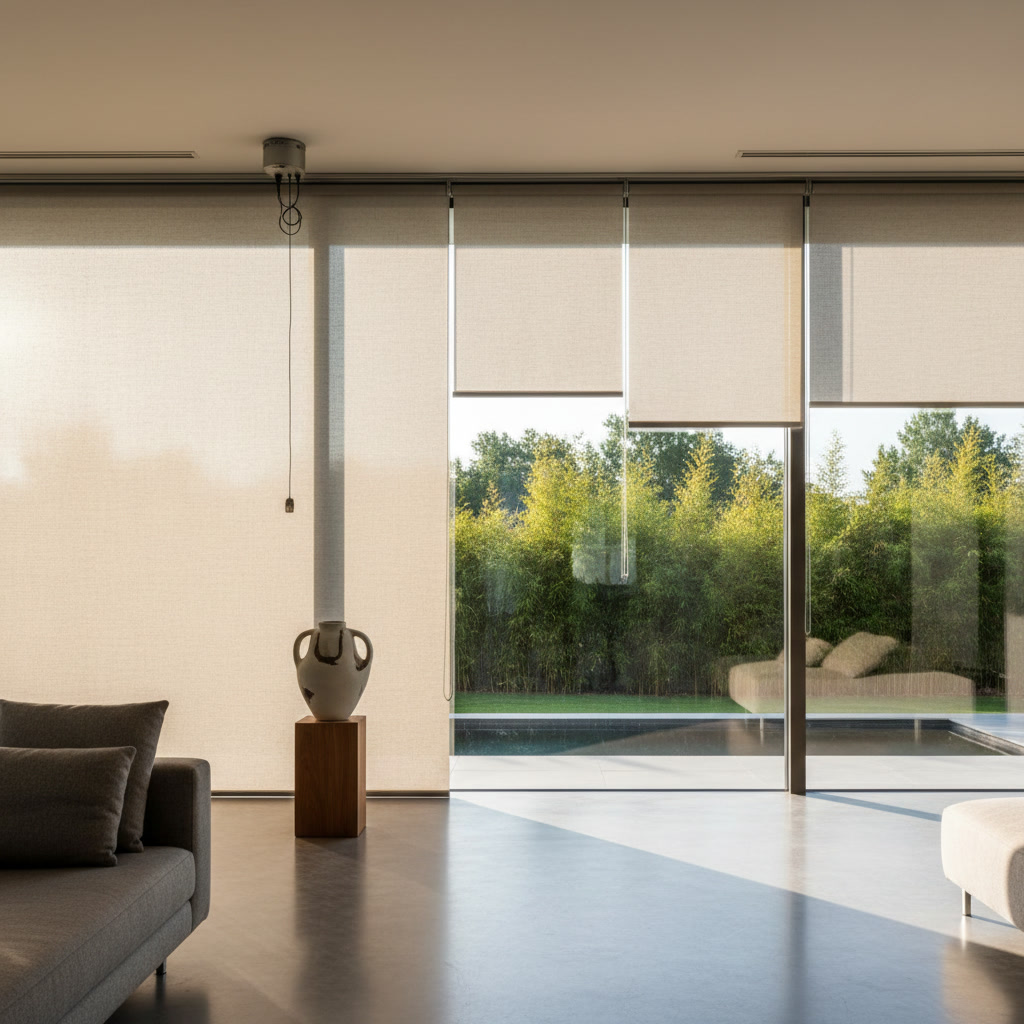
Three motor categories dominate the motorized shades large windows market. Each offers distinct advantages depending on window size, fabric weight, and budget constraints.
Battery-Powered Motors
Battery-powered motors work well for windows up to 100 inches wide with medium-weight fabrics. Modern lithium-ion batteries provide 400-800 cycles per charge, translating to six months to a year of typical use. These motors eliminate the need for hardwiring, making them ideal for retrofit installations where running electrical lines proves difficult or expensive.
The downside is recharging. For large homes with multiple oversized windows, maintaining battery schedules becomes tedious. Battery motors also deliver less torque than hardwired alternatives, limiting their use on the heaviest shade configurations.
Low-Voltage Hardwired Motors
Low-voltage motors (typically 12V or 24V DC) offer the best balance for most large residential applications. They handle shades up to 150 inches wide and 120 pounds in weight when properly specified. These motors integrate seamlessly with smart home systems, providing reliable performance without battery maintenance.
Installation requires running low-voltage wire from a transformer to each motor. While more involved than battery solutions, the reliability and integration capabilities make hardwired motors the professional standard for premium installations across Phoenix and surrounding areas.
High-Voltage AC Motors
For truly massive windows exceeding 16 feet or commercial applications, high-voltage AC motors deliver the necessary torque. These industrial-grade units handle extreme weights and widths but require licensed electrical work for 110V or 220V connections. Cost runs significantly higher, typically justified only when other motor types cannot physically handle the load.
Pro Tip: Always calculate total shade weight including fabric, hembar, mounting hardware, and the tube itself. Manufacturers specify motor capacity based on total system weight, not fabric alone.
Control Systems and Integration Options
Once motor requirements are satisfied, control systems determine how you interact with your motorized shades large windows daily. Modern installations offer multiple tiers of sophistication.
Remote Control
Basic remote controls provide simple up, down, and stop functions. Multi-channel remotes control groups of shades independently, useful when different rooms need different light levels. While economical, remotes require physical access and can be misplaced.
Wall Switches and Timers
Hardwired wall switches integrate cleanly into existing decor and eliminate the remote problem. Programmable timers automate daily routines, raising shades at sunrise and lowering them at sunset without manual intervention. These systems work independently of internet connectivity, ensuring reliability.
Smart Home Integration
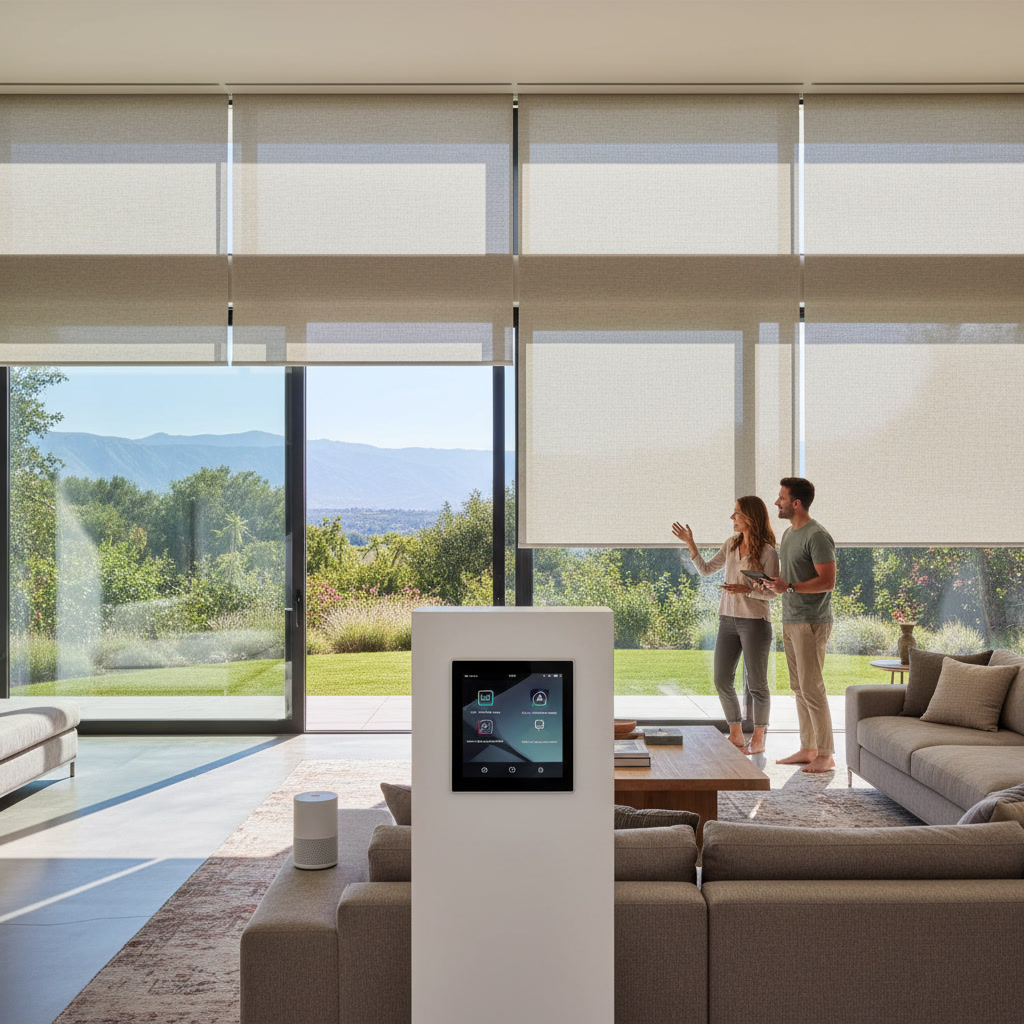
Full smart home integration connects motorized shades to platforms like Control4, Crestron, Savant, or consumer systems including Amazon Alexa and Google Home. Voice commands, smartphone apps, and automated scenes based on time, temperature, or occupancy provide the ultimate convenience.
Integration also enables coordination with other systems. Your shades can lower automatically when your home theater activates, or raise when your security system detects you arriving home. These capabilities transform individual motorized shades into components of a cohesive smart environment.
Fabric Selection and Light Control Performance
Fabric choice dramatically affects both motor requirements and functional performance. Large windows demand fabrics engineered specifically for wide spans to prevent sagging, billowing, and premature wear.
Sheer and light-filtering fabrics weigh less, reducing motor requirements while maintaining views and diffusing harsh Arizona sunlight. These fabrics work well in living areas where complete darkness is unnecessary. Openness factors ranging from one percent to 14 percent control how much light and visibility passes through.
Blackout fabrics block 99 percent of light but weigh significantly more. A 14-foot blackout roller shade can easily exceed 60 pounds, demanding robust motors and reinforced mounting. Bedrooms, media rooms, and spaces requiring complete darkness justify the additional weight and cost.
Dual-shade systems combine sheer and blackout fabrics on a single motorized system, offering flexibility without doubling hardware. One motor controls both layers, allowing you to adjust between filtered light, full view, or complete privacy as needs change throughout the day.
Key Takeaway: Fabric weight increases exponentially with window width. A 50-inch shade might weigh 15 pounds with blackout fabric, but a 150-inch shade of identical fabric can weigh 70 pounds or more due to larger tube diameter and heavier hembars required for wide spans.
Mounting and Installation Considerations
Proper mounting separates reliable motorized shade installations from systems that sag, bind, or fail prematurely. Large windows magnify installation challenges due to weight, span, and precision requirements.
Structural Support
Shades exceeding 80 pounds require mounting into structural framing, not just drywall anchors. Installers must locate studs, beams, or headers capable of supporting dynamic loads as the shade raises and lowers thousands of times over its lifetime. Some installations require custom steel brackets fabricated to distribute weight across multiple mounting points.
Inside Mount vs. Outside Mount
Inside mounts fit within the window frame, creating a clean built-in appearance. This approach works when frame depth exceeds three inches and width measurements are exact. Large windows with frame tolerances or insufficient depth require outside mounts, where brackets attach to the wall above the window.
Outside mounts allow easier installation and accommodate imperfect framing but project further into the room. For sliding glass doors, outside mounts must clear door operation while providing adequate light blockage when shades are lowered.
Clearance and Stacking
When raised, motorized shades stack at the top of the window. Thicker blackout fabrics create larger rolls, potentially blocking six to 12 inches of glass even when fully open. Account for stack height during design to ensure adequate clearance and acceptable aesthetics when shades are retracted.
For extremely wide windows, side-by-side shade configurations may prove more practical than a single massive unit. Two 84-inch shades perform more reliably than one 168-inch shade, with the added benefit of independent control for different light zones.
Power Requirements and Wiring Infrastructure
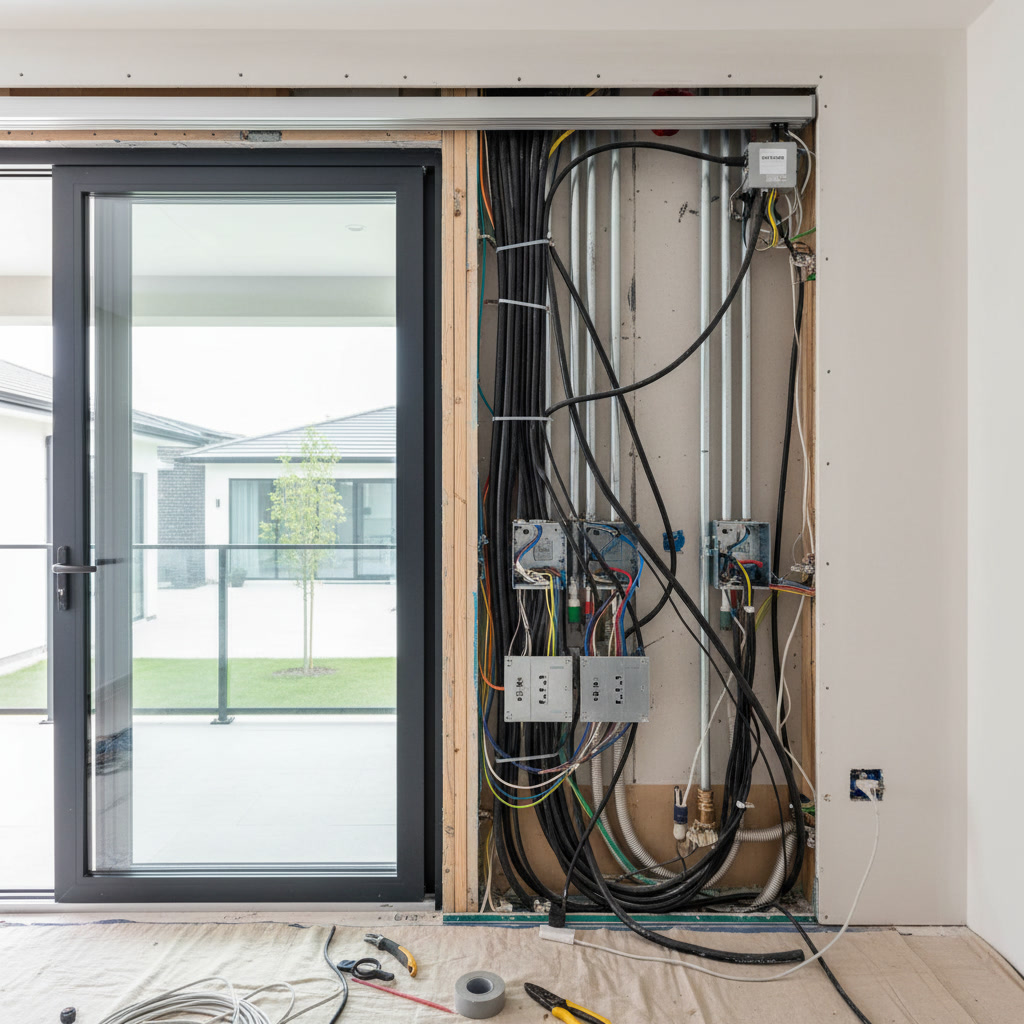
Beyond individual motor specifications, large-scale motorized shade installations require careful electrical planning. Homes with eight to 12 motorized shades large windows need sufficient power capacity and properly rated transformers.
Low-voltage systems typically use one transformer per three to six shades, depending on motor draw. Centralized wiring hubs simplify troubleshooting and future modifications compared to scattered individual transformers. Professional installers coordinate with electricians to ensure adequate circuits and avoid overloading existing electrical infrastructure.
Battery-powered systems eliminate electrical work but introduce logistics around charging access. Shades mounted 12 feet high require ladders for battery service. Some manufacturers offer solar-powered charging solutions for south-facing windows, though Arizona’s intense sun can degrade solar cells faster than in moderate climates.
Smart home integration adds network connectivity requirements. Whether using hardwired Ethernet, WiFi, or proprietary RF protocols, reliable communication between shades and control systems is essential. Homes with challenging WiFi coverage may need network upgrades to ensure responsive shade control throughout the property.
Climate Considerations for Arizona Installations
Arizona’s extreme temperatures and intense UV exposure create unique challenges for motorized shades large windows. Summer temperatures inside window cavities can exceed 150 degrees Fahrenheit, potentially affecting motor electronics and fabric integrity.
Quality motors include thermal protection that pauses operation if internal temperatures reach unsafe levels. Cheaper motors without thermal cutoffs can burn out during Phoenix summers, especially on west-facing windows receiving afternoon sun.
UV-resistant fabrics and coatings extend lifespan in high-exposure locations. Standard fabrics degrade faster under Arizona sun, fading and weakening within five to seven years. Premium UV-stabilized materials maintain appearance and function for 10 to 15 years or more.
Monsoon season introduces humidity and dust infiltration. Sealed motor housings protect electronics from moisture and particulates. Regular maintenance, including cleaning fabric and vacuuming tracks, prevents debris accumulation that can bind mechanisms or scratch glass.
Cost Factors and Budget Planning
Motorized shades large windows represent significant investments, with costs varying based on multiple factors. Understanding pricing components helps set realistic budgets and avoid surprises.
Motor quality and type account for 30 to 40 percent of total cost. Entry-level battery motors start around 200 dollars per window, while commercial-grade hardwired motors can exceed 800 dollars. Fabric selection adds another 15 to 30 dollars per square foot depending on material, with blackout and specialty fabrics commanding premium prices.
Installation labor for large windows requires experienced professionals. A typical sliding glass door installation takes three to four hours including mounting, wiring, programming, and testing. Complex multi-shade installations with smart home integration can require full-day or multi-day commitments.
Smart home integration hardware and programming add 500 to 2,000 dollars depending on system complexity and whether existing infrastructure can be utilized. Standalone remote systems cost significantly less but sacrifice automation capabilities.
Budget 4,000 to 8,000 dollars per large window or sliding door for complete motorized shade systems including quality motors, durable fabrics, professional installation, and basic smart home integration. Premium materials, complex configurations, or extensive automation can push costs higher.
Professional Installation vs. DIY Approaches
While some homeowners consider DIY installation to reduce costs, motorized shades large windows present challenges that typically justify professional service. Precise measurements, structural mounting, electrical work, and programming require specialized knowledge and tools.
Incorrect measurements waste hundreds or thousands of dollars in custom-fabricated shades that do not fit. Improper mounting creates safety hazards as heavy shades pull free from walls. Poor motor selection leads to premature failure and replacement costs exceeding initial professional installation savings.
Professional installers bring experience identifying potential issues before they become expensive problems. They coordinate with other trades, ensure building code compliance, and provide warranties covering both parts and labor. For large-format installations across Mesa, Scottsdale, and surrounding communities, this expertise proves invaluable.
Reputable contractors also maintain relationships with quality manufacturers, accessing better products and pricing than retail consumers. They stay current on emerging technologies and can recommend solutions matching your specific needs rather than pushing inventory they need to move.
Maintenance and Longevity Expectations
Properly specified and installed motorized shades large windows require minimal maintenance but benefit from periodic attention. Annual inspections identify worn components before they fail, extending system life and preventing inconvenient breakdowns.
Fabric should be vacuumed or dusted quarterly to prevent buildup that can stress motors and create visible soil lines. Check mounting brackets annually for tightness, as vibration from daily operation can loosen hardware over time. Lubricate moving parts according to manufacturer specifications, typically annually for residential installations.
Motors typically last 10 to 15 years under normal residential use before requiring replacement. Quality fabrics last eight to 12 years in Arizona’s harsh sun. Plan for eventual component replacement as part of long-term home maintenance budgeting.
Most failures stem from improper initial specification rather than component defects. Undersized motors wear prematurely. Inadequate mounting allows bracket failure. Poor fabric choice leads to early degradation. Professional installation from experienced contractors largely eliminates these preventable issues.
Frequently Asked Questions
What is the maximum width for a single motorized shade on large windows?
Most residential-grade motorized shade systems reliably handle widths up to 144 inches (12 feet) with appropriate motor selection and fabric weight considerations. Beyond 12 feet, side-by-side configurations or commercial-grade systems become necessary. Exact limits depend on fabric type, with sheer materials allowing wider spans than heavy blackout fabrics.
Can motorized shades work during power outages?
Battery-powered motorized shades function normally during outages until batteries deplete. Hardwired systems require backup power solutions like UPS units or whole-home generators to operate during outages. Most quality motors include manual override mechanisms allowing shades to be raised or lowered by hand when power is unavailable, though this can be awkward with large, heavy shades.
How much energy do motorized shades save on large windows?
Properly deployed motorized shades reduce cooling costs by 15 to 25 percent on large south and west-facing windows by blocking solar heat gain during peak hours. Automated systems optimize savings by responding to actual sun position and temperature rather than relying on manual adjustment. The combination of reflective fabrics and smart scheduling maximizes energy efficiency while maintaining comfort and views when heat gain is minimal.
What warranty coverage should I expect for motorized shade installations?
Quality motors typically carry five to ten-year manufacturer warranties covering defects and mechanical failure. Fabric warranties range from three to seven years depending on material and UV exposure. Professional installation should include at least a one-year labor warranty. Verify warranty terms before purchase, as coverage varies significantly between manufacturers and installation companies.
Can existing manual shades be converted to motorized operation?
Some manual shade systems can be retrofitted with motors if the existing tube, brackets, and fabric are compatible and in good condition. However, most large manual shades were not engineered for motorization and lack necessary reinforcement. In most cases, complete replacement proves more reliable and cost-effective than attempting conversion, especially for oversized windows where structural integrity is critical.
Making the Right Choice for Your Home
Motorized shades large windows deliver convenience, energy savings, and enhanced living comfort when properly specified and professionally installed. The investment requires careful consideration of motor capacity, fabric selection, control systems, and installation quality to ensure years of reliable performance.
Arizona’s unique climate demands motors and materials engineered for extreme temperatures and intense UV exposure. Cutting corners on quality or attempting DIY installation on large-format windows typically results in disappointment and additional expense.
Pro Home Entertainment LLC specializes in motorized window shade solutions throughout the Phoenix metropolitan area. Our experienced team handles everything from initial consultation and precise measurement through professional installation and smart home integration. We help homeowners across Arizona select the right motors, fabrics, and control systems for their specific windows and lifestyle needs. Contact us at +12068194038 to discuss your large window automation project and schedule a consultation.