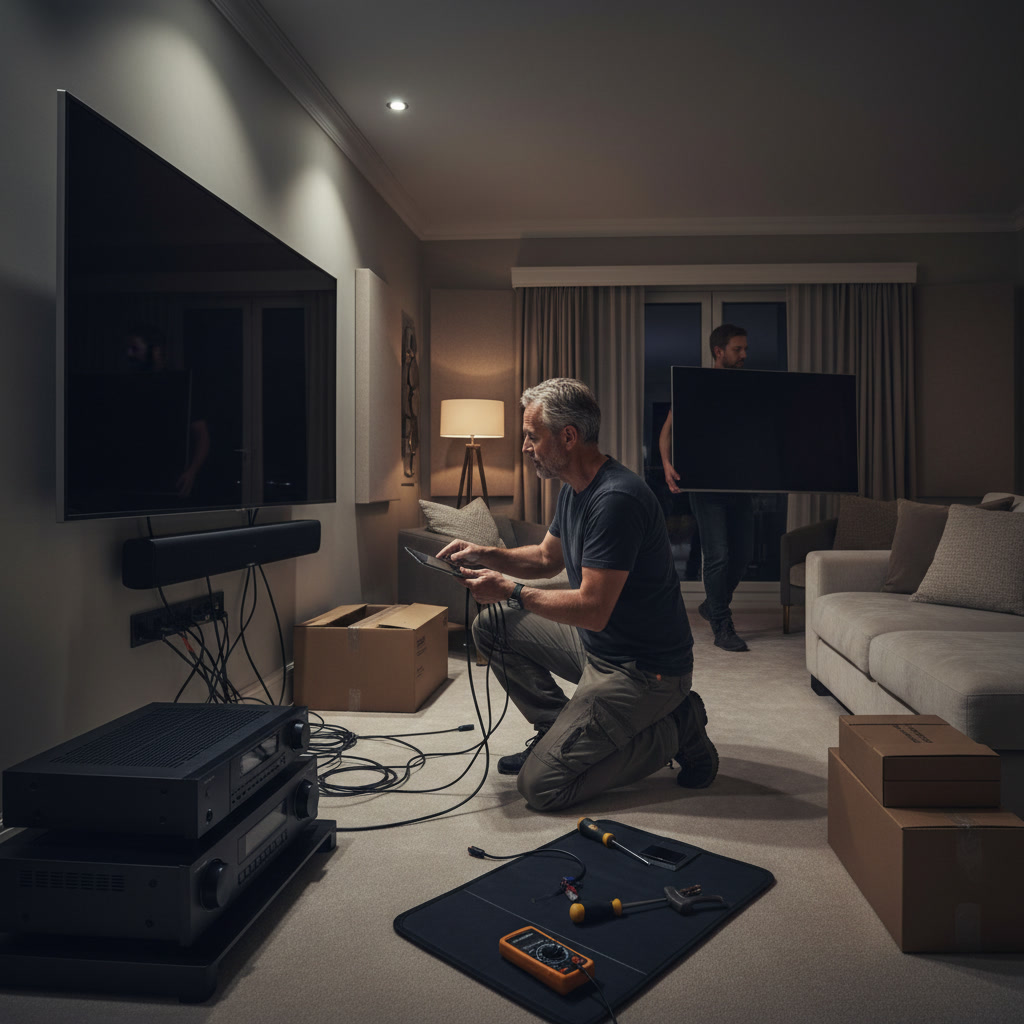
A home entertainment system upgrade becomes necessary when picture quality suffers, connectivity fails, or your equipment can’t support modern streaming formats. Outdated components like old receivers, low-resolution displays, and tangled cable setups prevent you from enjoying today’s 4K and HDR content. Recognizing these warning signs early helps you avoid frustration and ensures your investment delivers the immersive experience you deserve.
Why Modern Home Entertainment Standards Matter
Television and audio technology has evolved rapidly over the past five years. The content you stream today demands higher bandwidth, better color accuracy, and more processing power than systems designed even a decade ago could handle. Many homeowners continue using equipment that worked perfectly in 2015 without realizing how much they’re missing.
Streaming services now deliver 4K resolution, Dolby Atmos sound, and high dynamic range imagery as standard features. Your hardware needs to decode these formats in real time. Older HDMI cables rated at version 1.4 can’t pass through the data required for 4K at 60 frames per second, creating stuttering playback or forcing your display to downscale to 1080p.
Your Display Delivers Poor Picture Quality
Blurry edges, washed-out colors, and visible motion blur during fast action scenes signal that your television or projector has fallen behind current standards. Displays manufactured before 2018 often lack the peak brightness needed for HDR content, which uses brightness levels above 1,000 nits to create realistic highlights and shadow detail.
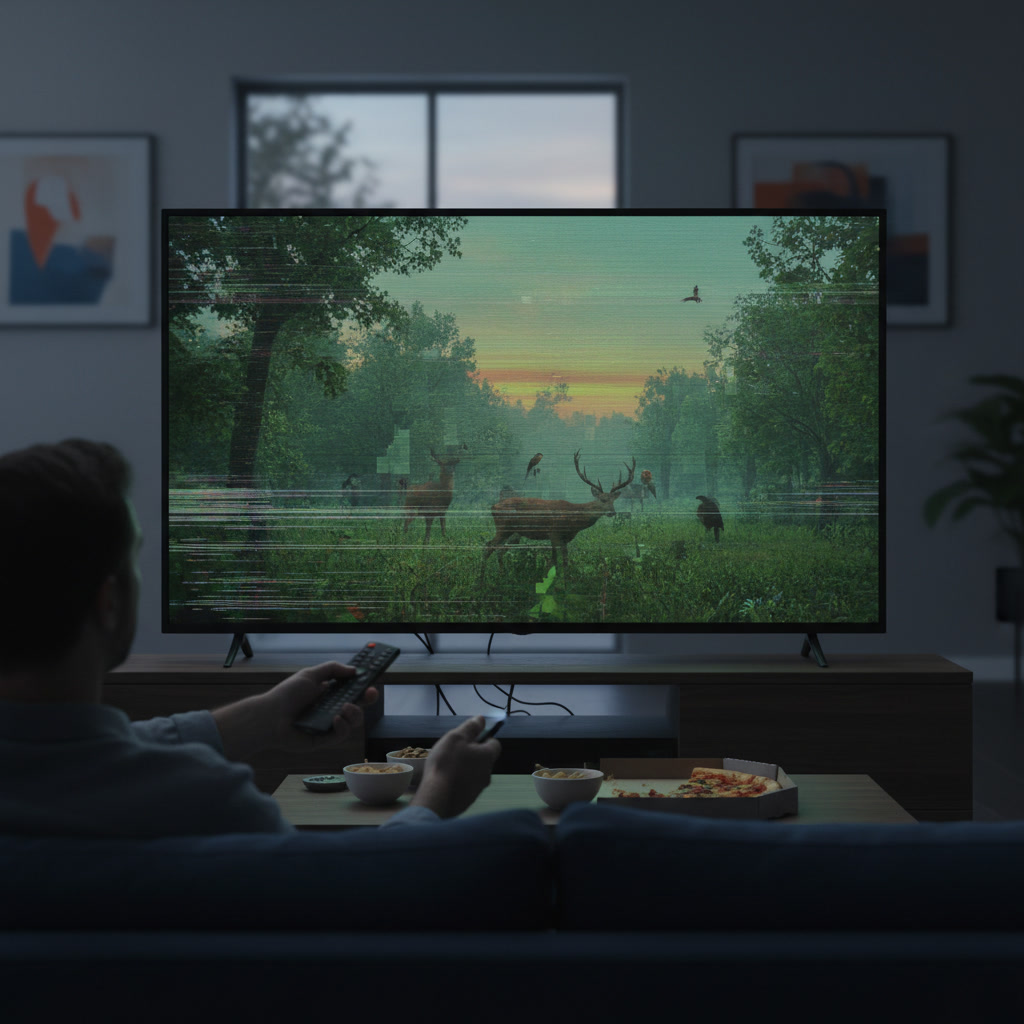
Screen size also matters more than most people realize. A 55-inch TV viewed from 10 feet away doesn’t provide the immersive experience that proper home theater design can achieve. If you find yourself squinting to read text or missing details in dark scenes, either your screen is too small for the viewing distance or its contrast ratio has degraded over time.
Panel technology has improved dramatically. OLED and Mini-LED displays offer per-pixel lighting control that older LCD panels simply cannot match, creating deeper blacks and more vibrant colors without the halo effect common in edge-lit screens.
Audio Sounds Flat or Distorted
If dialogue sounds muffled, explosions lack impact, or you constantly adjust the volume between quiet and loud scenes, your audio components need attention. Built-in TV speakers were never designed for quality sound, and even external soundbars from five years ago lack the processing for object-based audio formats like Dolby Atmos.
True surround sound requires proper speaker placement and calibration. Many systems installed years ago used incorrect speaker angles or placed the subwoofer in a corner where room modes create boomy, inaccurate bass. Professional audio solutions account for room acoustics, furniture placement, and listener position to create balanced sound across all frequencies.
Receivers also age out of compatibility. An AV receiver from 2016 won’t decode newer Dolby Atmos or DTS:X tracks, downmixing them to basic 5.1 surround and losing the height channels that create overhead sound effects. You can learn more about proper multi-room audio design in our guide on setting up whole home audio systems.
Connectivity Issues Disrupt Your Viewing
Frequent buffering, apps that crash, or devices that won’t connect to your network point to inadequate Wi-Fi coverage or outdated smart TV processors. Streaming 4K content requires sustained speeds of at least 25 Mbps per device, and most homes now run multiple streams simultaneously.
Older routers using single-band 2.4 GHz signals struggle in environments with interference from neighboring networks and household appliances. Modern mesh systems and Wi-Fi 6 technology provide the bandwidth and stability that contemporary streaming demands. Homes in areas like Scottsdale and Mesa often have thick stucco walls that block wireless signals, requiring professional Wi-Fi network solutions with hardwired access points.
Smart TVs also have limited lifespans for software updates. A television purchased in 2017 may no longer receive app updates for major streaming services, leaving you unable to access new features or forcing you to add external streaming devices that clutter your setup.
Cable Management Has Become a Tangled Mess
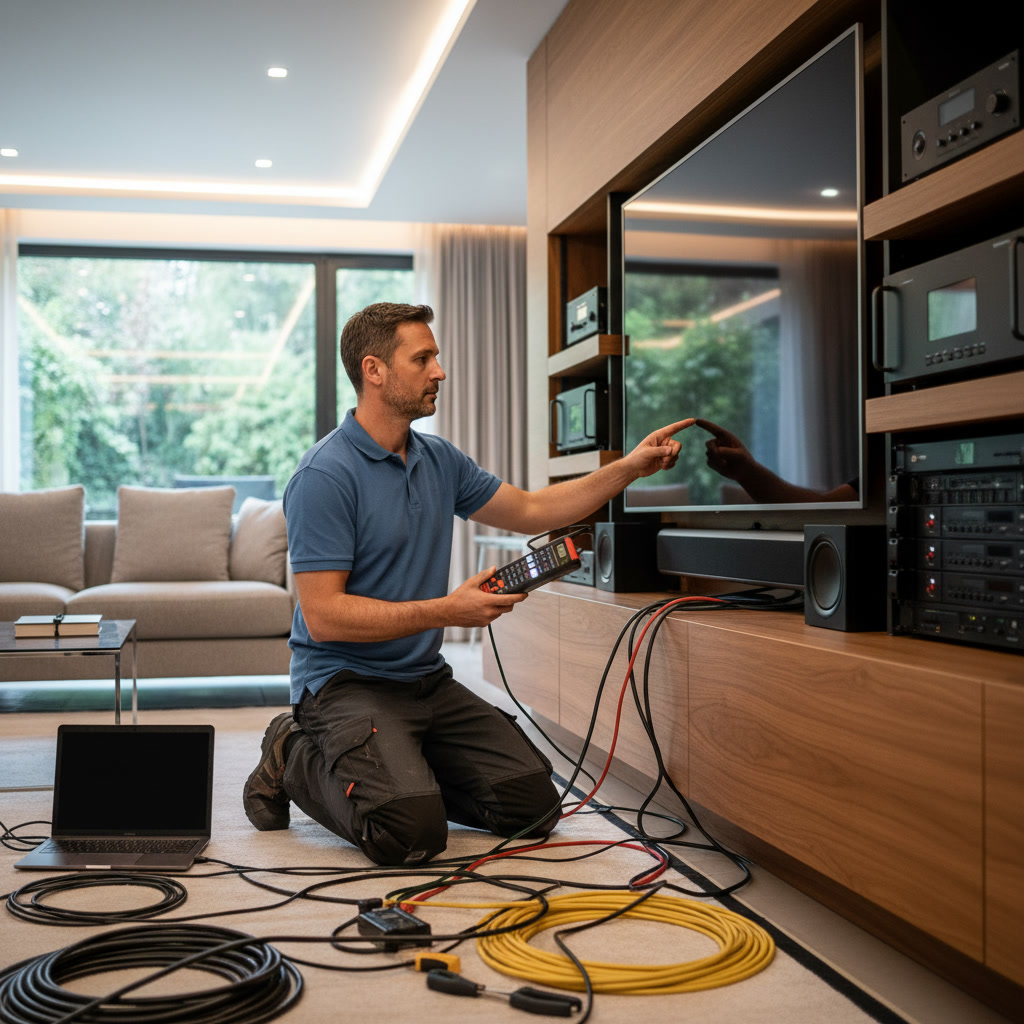
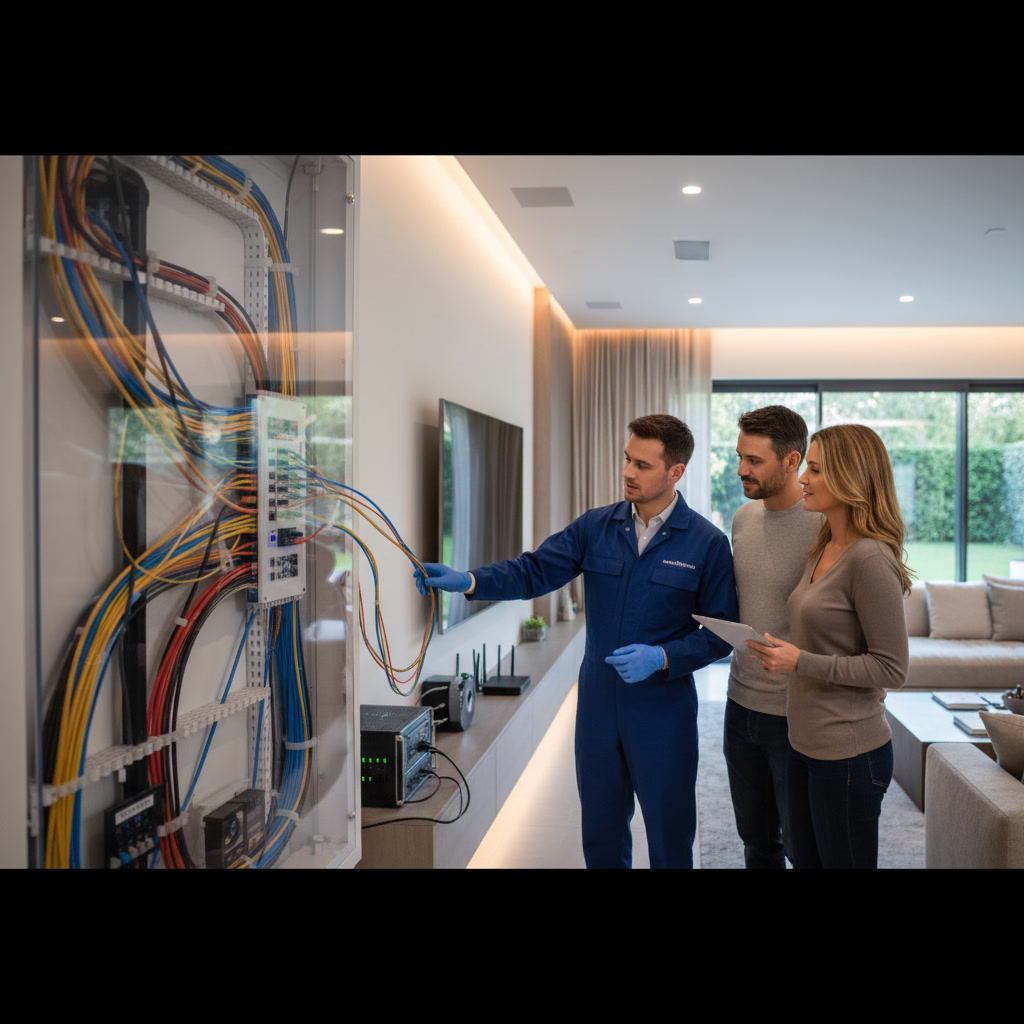
Visible wires running along baseboards, stacks of remotes on your coffee table, and confusion about which input connects to which device all indicate a system that grew organically without planning. This chaos isn’t just unsightly; it creates real problems when you need to troubleshoot issues or add new components.
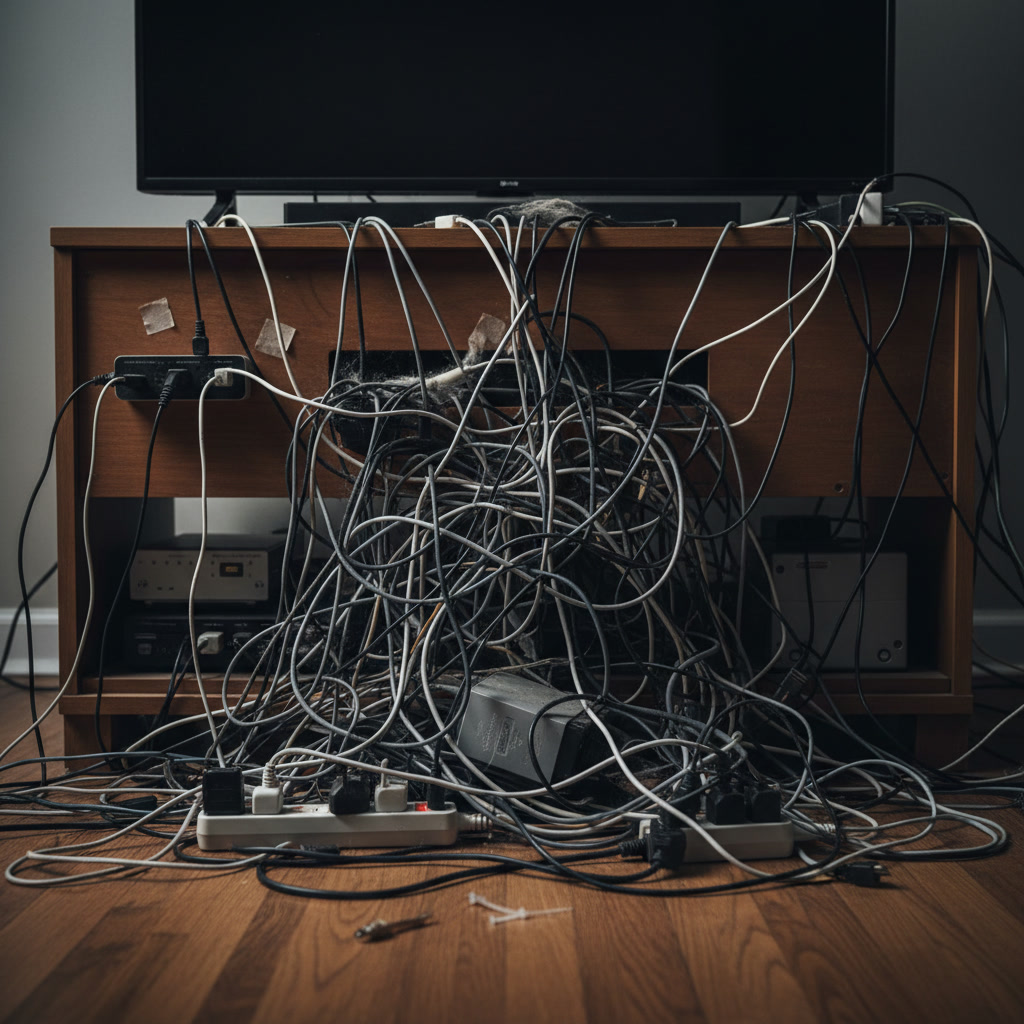
Professional installations hide cables inside walls, use labeled connections, and consolidate control into a single interface. In-wall rated cables meet fire code requirements and provide long-term reliability that standard consumer cables don’t offer. Proper cable routing also prevents signal degradation that occurs when power cables run parallel to HDMI or speaker wires for long distances.
Your System in Mesa Lacks Smart Home Integration
Entertainment systems installed before smart home technology became mainstream operate as isolated islands. You adjust lights separately from your TV, control window treatments with different remotes, and can’t create scenes that prepare your room for movie watching with a single command.
Modern smart home platforms integrate lighting, climate, shades, and AV equipment into unified scenes. A properly configured system dims your lights to 10 percent, lowers motorized shades, sets your receiver to cinema mode, and starts your projector when you select a movie. This level of automation was impossible with equipment designed before 2018.
Voice control through assistants like Alexa or Google has also matured. Instead of navigating menus with a remote, you simply speak commands to adjust volume, change inputs, or search for content across multiple streaming services.
You Can’t Access the Latest Gaming Features
Gaming consoles like the PlayStation 5 and Xbox Series X require HDMI 2.1 connections to enable 4K gaming at 120 Hz, variable refresh rates, and auto low-latency mode. Televisions and receivers without these ports force the console to operate in compatibility mode, cutting frame rates in half and introducing input lag that affects gameplay.
Dedicated gaming room setups also benefit from low-latency audio systems. Traditional AV receivers add 20-40 milliseconds of audio delay while processing surround sound, creating a disconnect between what you see and what you hear. Gaming-optimized systems reduce this to under 10 milliseconds.
Display response time matters too. Older LCD panels have response times above 20 milliseconds, creating motion blur during fast camera movements. Modern gaming displays operate at 5 milliseconds or less, maintaining crisp imagery even during intense action.
Energy Consumption Has Increased Noticeably
Entertainment equipment from 10 years ago consumes significantly more power than current models. Plasma televisions drew 300-400 watts during operation compared to 100-150 watts for equivalent-sized LED displays. Older receivers and amplifiers also run inefficiently, generating excessive heat that shortens component lifespan.
Beyond the environmental impact, this inefficiency costs money. A household running legacy equipment for four hours daily might spend an extra 200 dollars per year compared to modern Energy Star certified components. The savings from efficient gear can partially offset the upgrade cost over the system’s lifetime.
Physical Components Show Visible Wear
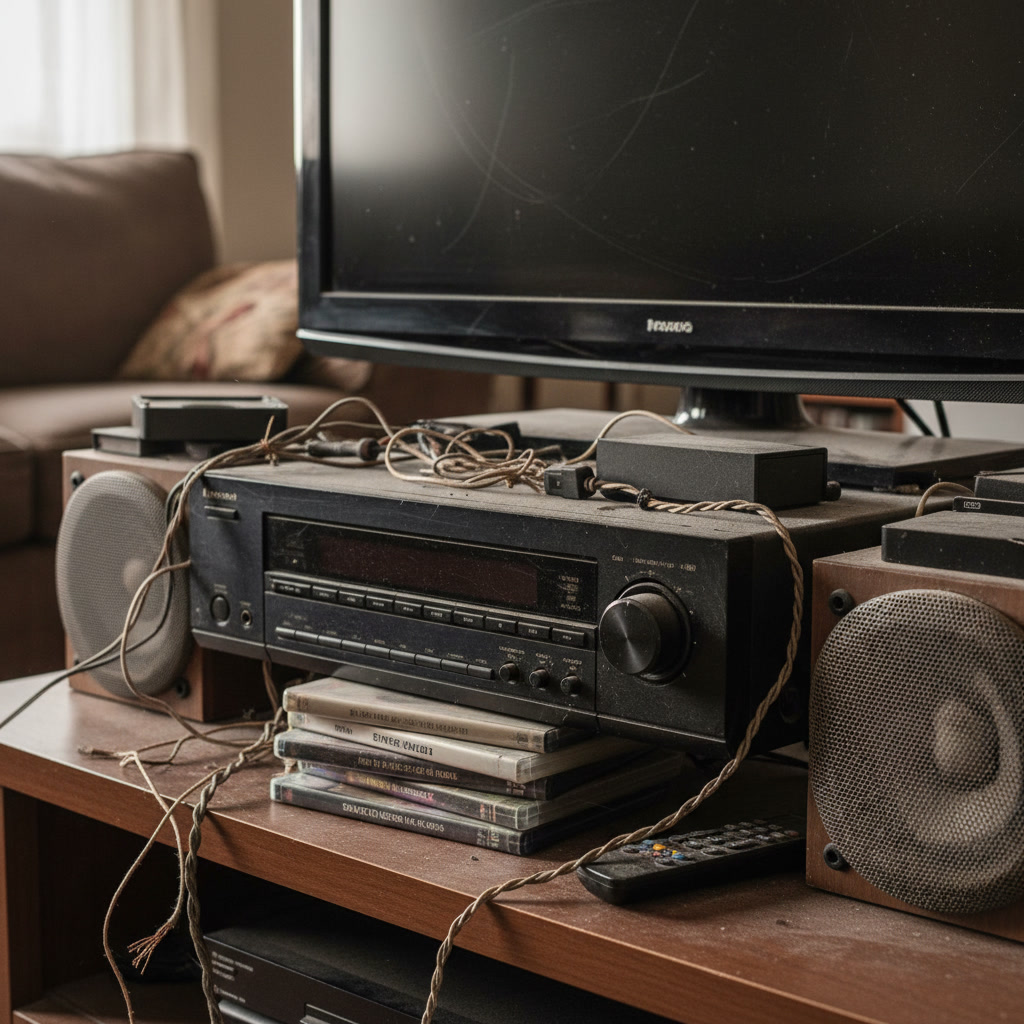
Yellowed plastic housings, stuck buttons, intermittent connections, and screens with permanent image retention or dead pixels all indicate equipment nearing end of life. Capacitors in power supplies degrade over time, causing spontaneous shutdowns or failure to power on.
Projector lamps have finite lifespans between 2,000 and 5,000 hours depending on brightness settings. As lamps age, color accuracy shifts and brightness decreases by 30 percent or more. Replacement lamps for discontinued models often cost 300 dollars or more, making replacement with a new laser projector more economical.
Mechanical components like disc players and motorized screens also wear out. If your Blu-ray player takes multiple attempts to read discs or your projection screen no longer retracts smoothly, replacement parts may not be available for models over seven years old.
You’re Missing Features Your Neighbors Enjoy
When friends describe their automated lighting scenes, crystal-clear streaming, or immersive surround sound and your system can’t deliver those experiences, the gap between current and legacy technology has become too wide to ignore. Entertainment technology follows a replacement cycle of seven to 10 years before compatibility issues and performance gaps make upgrades necessary.
Professional installations also add resale value. Homes with integrated AV systems, whole-house audio, and smart automation command premium prices compared to properties with outdated or DIY setups. Buyers in communities throughout Phoenix specifically search for properties with modern entertainment infrastructure already in place.
Understanding When Professional Help Delivers Real Value
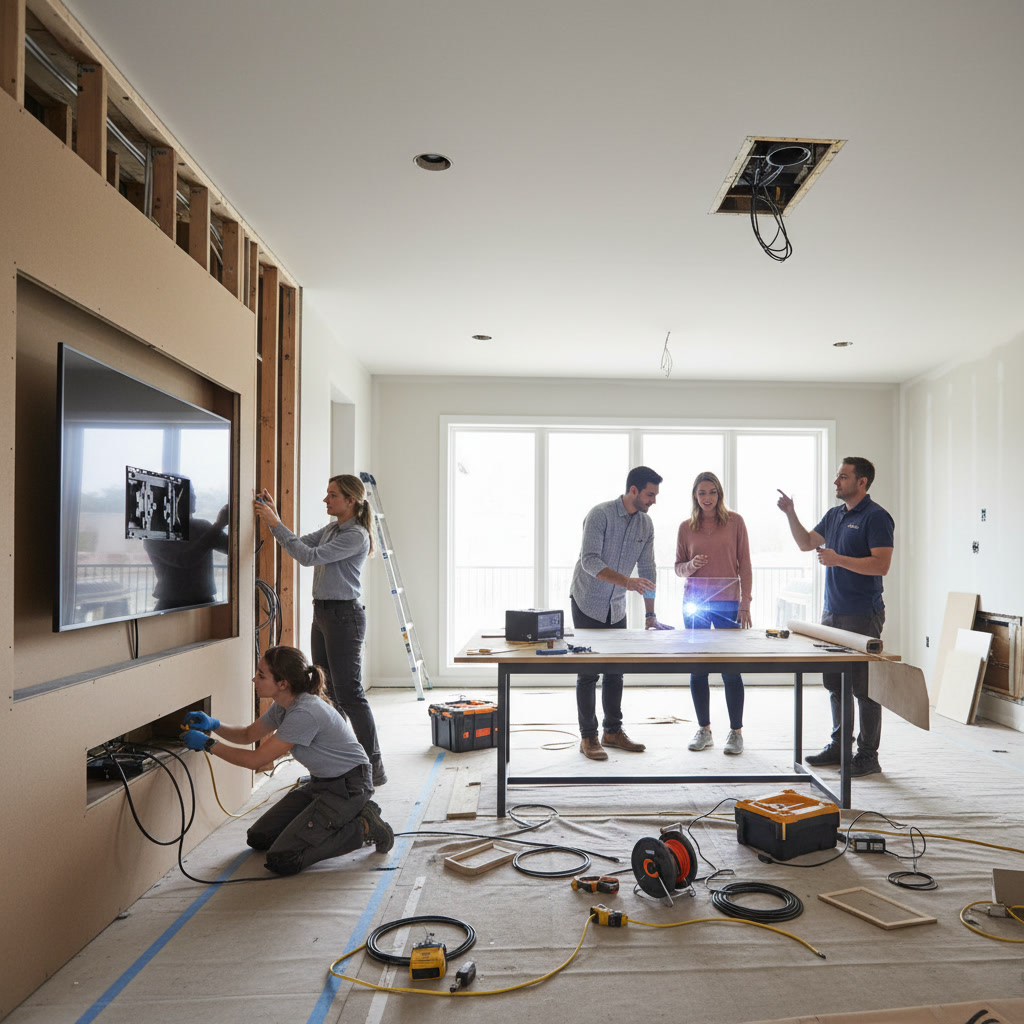
Simple component swaps like replacing a soundbar or mounting a new TV are reasonable DIY projects. Complex integrations involving in-wall wiring, multi-room audio, automated control systems, and calibrated surround sound require professional expertise to avoid costly mistakes.
Licensed contractors carry insurance that protects your property during installation. They also understand local building codes for in-wall wiring, fire-rated cable requirements, and proper electrical load calculations. A poorly installed system can create fire hazards, void manufacturer warranties, or require expensive corrective work.
Professional calibration makes a measurable difference in performance. Using specialized meters and software, technicians adjust display color accuracy to within two percent of reference standards and tune speaker time alignment to the millisecond. These adjustments are impossible without proper tools and training, yet they determine whether your system performs at its full potential or merely functions.
Bringing Your Entertainment Experience Into the Present
Recognizing these warning signs helps you make informed decisions about when to refresh your home entertainment setup. Modern AV technology offers dramatic improvements in picture quality, sound immersion, and ease of use compared to systems even five years old. Whether you’re experiencing connectivity problems, poor audio, or simply want access to features your current equipment can’t provide, a thoughtful upgrade restores the enjoyment your entertainment system should deliver.
Pro Home Entertainment LLC specializes in designing and installing integrated AV solutions throughout the greater Phoenix area. Our team evaluates your existing setup, identifies performance bottlenecks, and recommends components that match your viewing habits and budget. From simple display upgrades to complete home theater transformations, we ensure every installation meets the highest standards for safety, reliability, and long-term performance. Contact us at +12068194038 to schedule a consultation and discover how the right equipment can transform your daily entertainment experience.