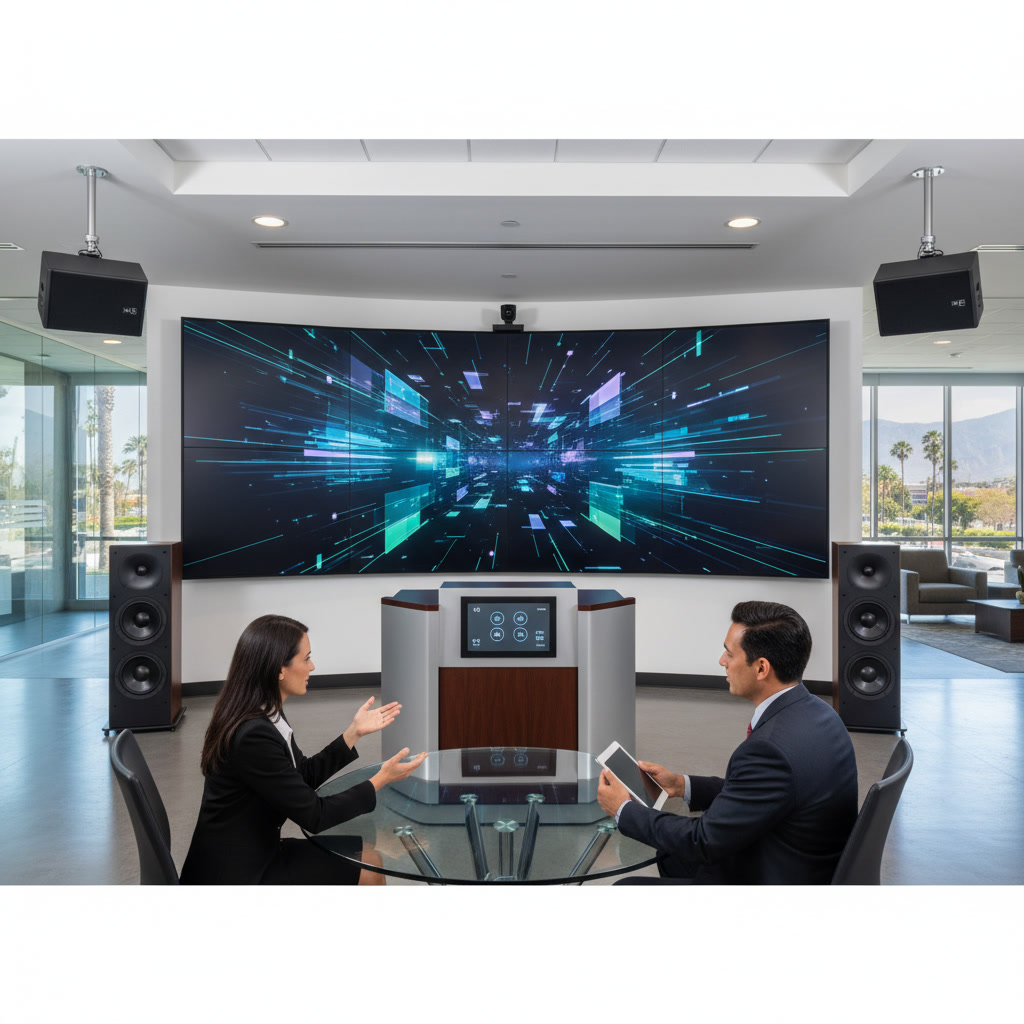
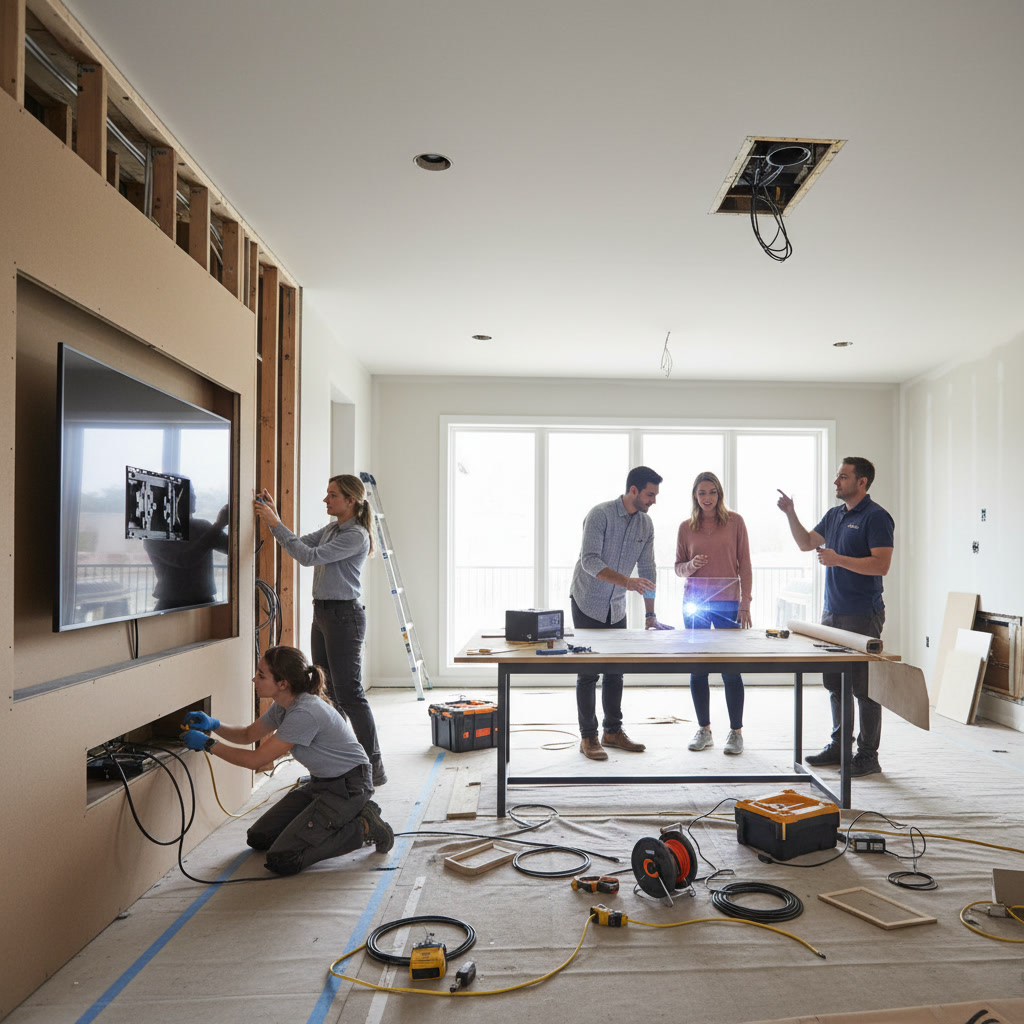
Professional home entertainment installation follows a structured process that transforms your space with cutting-edge audiovisual technology. From the initial consultation through final testing, each phase ensures your system performs flawlessly and meets your specific needs. Understanding this journey helps you prepare for the project and set realistic expectations about timeline, budget, and results.
Why Professional Installation Matters for Modern AV Systems
Modern audiovisual equipment offers incredible capabilities, but only when installed correctly. A professional installer brings technical expertise that goes far beyond mounting a TV or plugging in speakers. They understand cable management, signal flow, network integration, and acoustics. They know how to hide wires inside walls without violating building codes or creating fire hazards.
The difference becomes obvious when you compare a DIY project to professional work. Professional installations look clean, operate reliably, and integrate multiple components into a unified system. You get equipment positioned at optimal heights and angles, calibrated for your specific room, and programmed for intuitive control.
The Initial Consultation and Assessment
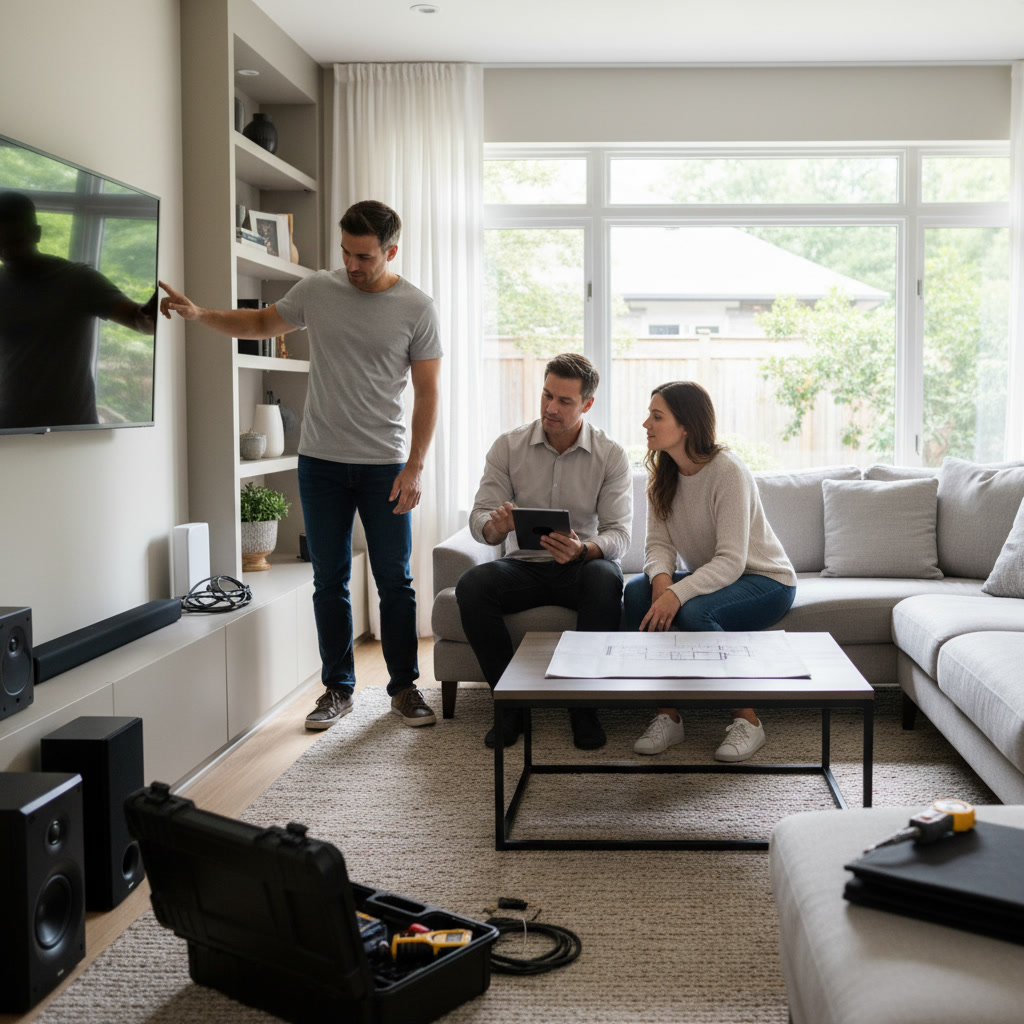
Every project begins with a consultation where the installer visits your home to understand your goals. This meeting covers your budget, preferred equipment brands, content sources, and how you plan to use the space. Do you want a dedicated theater room for movie nights, or a multi-zone audio system for entertaining guests throughout your home?
The installer measures the room, notes architectural features, checks existing wiring, and identifies potential obstacles. They assess ambient light conditions, wall construction types, and locations of electrical outlets and network connections. This information shapes the equipment recommendations and installation approach.
Custom Design and Equipment Selection
Based on the consultation, the installer creates a detailed proposal that specifies every component. This includes displays, speakers, amplifiers, receivers, streaming devices, control systems, and all necessary cables and mounts. The proposal shows equipment placement with measurements and explains how different components work together.
Quality installers recommend equipment that fits your actual needs rather than pushing the most expensive options. A 75-inch TV makes sense in a large family room, but wastes money in a 10×12 bedroom. Similarly, a seven-speaker surround system delivers immersive audio in a dedicated theater, while a soundbar might better suit a casual viewing space.
Project Planning and Scheduling
Once you approve the proposal, the installer orders equipment and schedules the installation date. Lead times vary depending on product availability, but custom items like built-in speakers or motorized shades can take several weeks. Standard installations with in-stock equipment often happen within a few days.
The installer coordinates with other trades if needed. For example, if you want motorized window shades integrated with your system, both the shade installer and AV technician need to work together. New construction or major renovations require coordination with electricians, framers, and drywall contractors.
Pre-Wire and Infrastructure Work in Mesa
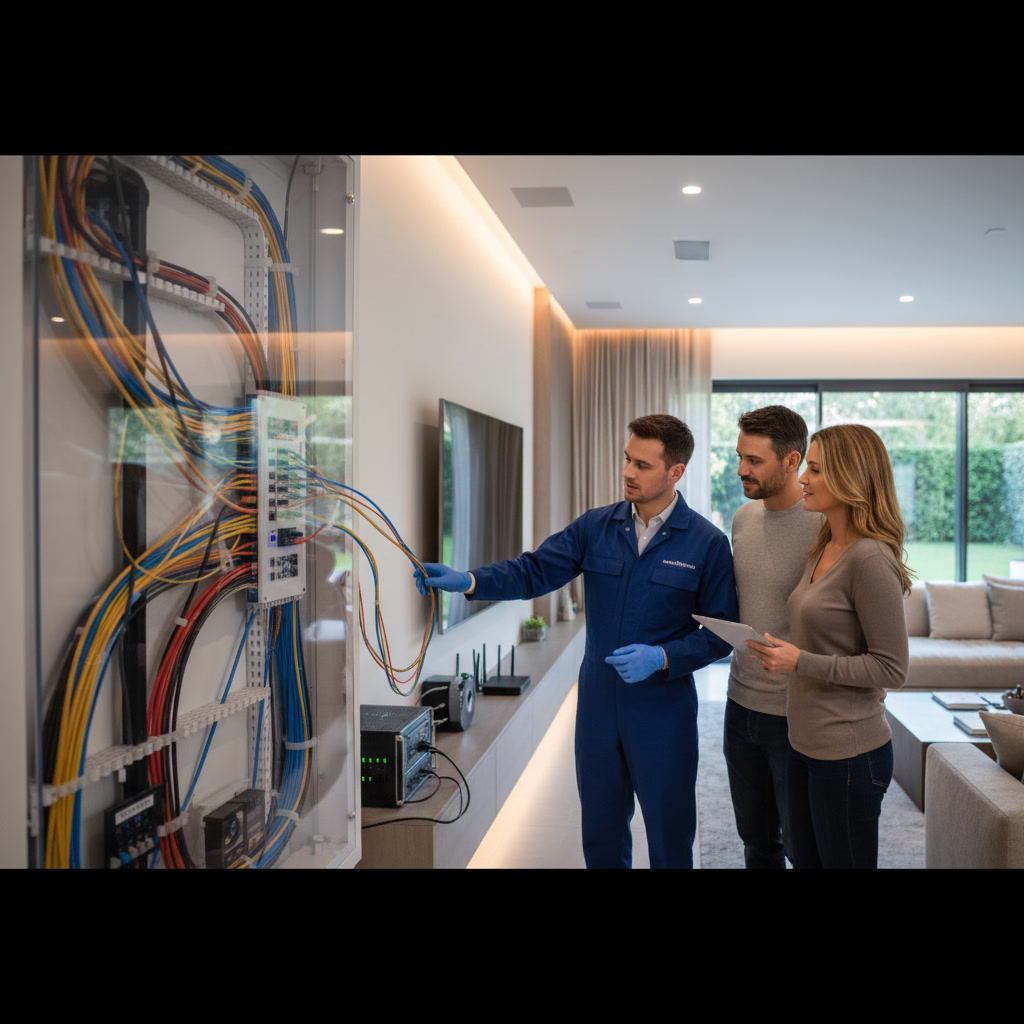
Many installations in Mesa require pre-wiring before equipment arrives. This involves running cables inside walls, through attics, or under floors while access is easy. HDMI cables connect displays to source equipment, speaker wire runs to each speaker location, and network cables establish reliable data connections.
Professional installers use proper cable types rated for in-wall use and follow local electrical codes. They label every wire at both ends, making future troubleshooting or upgrades much easier. They also install conduit or pull strings that allow adding new cables later without opening walls again.
Equipment Mounting and Installation Steps
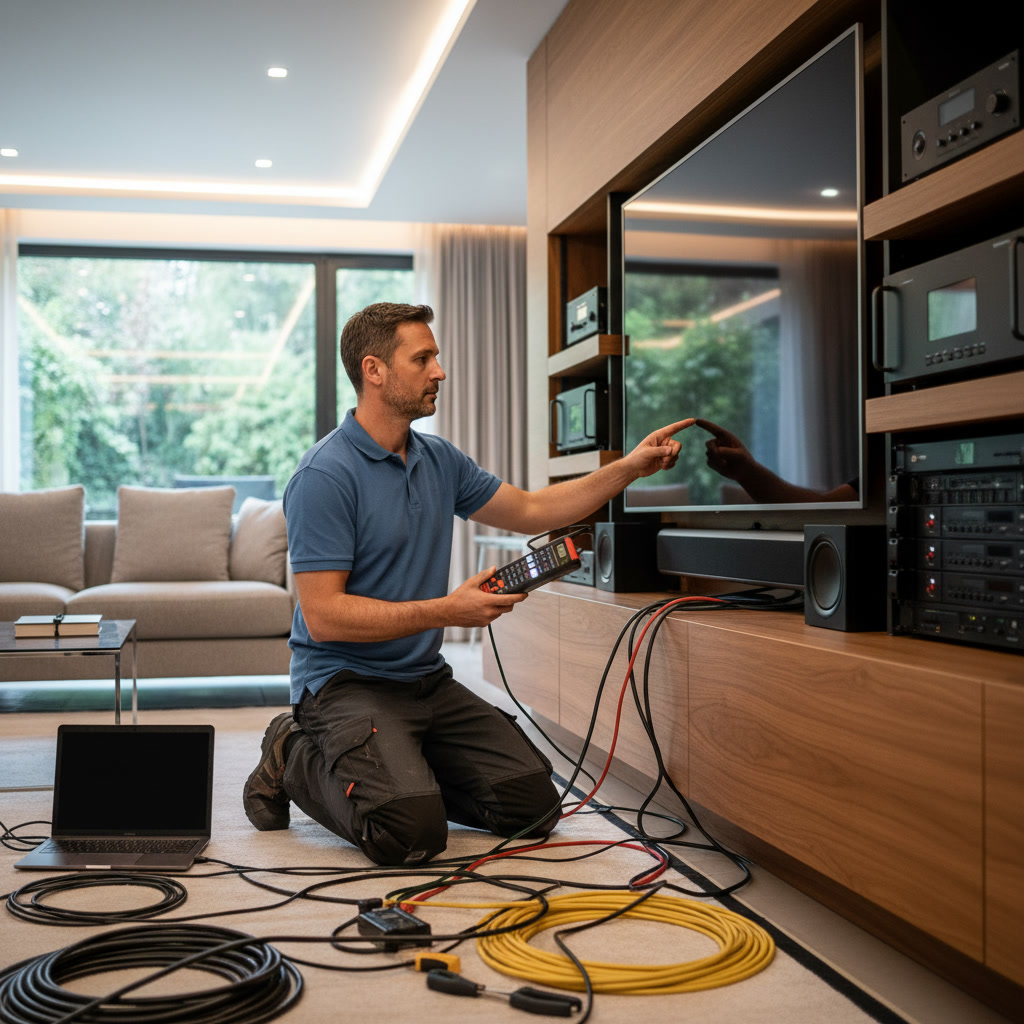
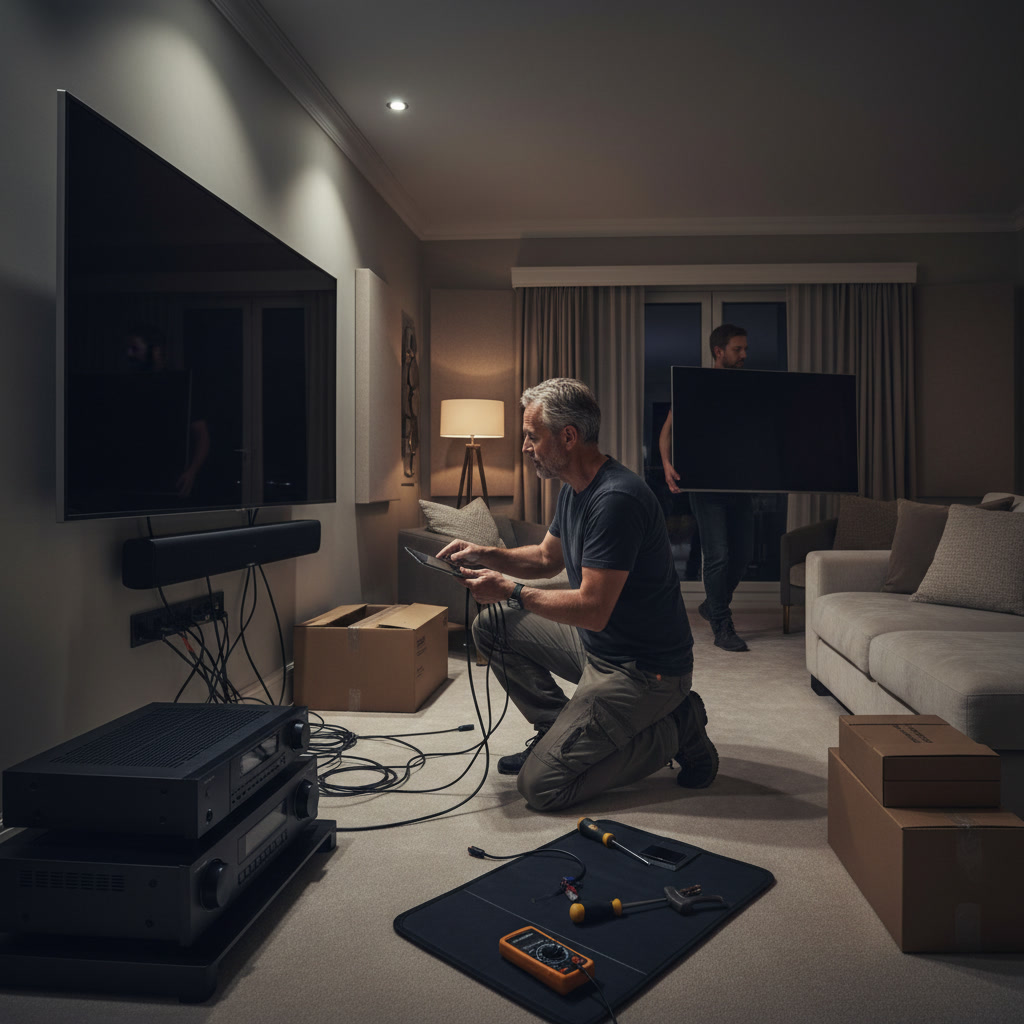
Installation day begins with carefully unpacking and inspecting all equipment. The installer verifies everything arrived undamaged and matches the order. They then proceed through these steps:
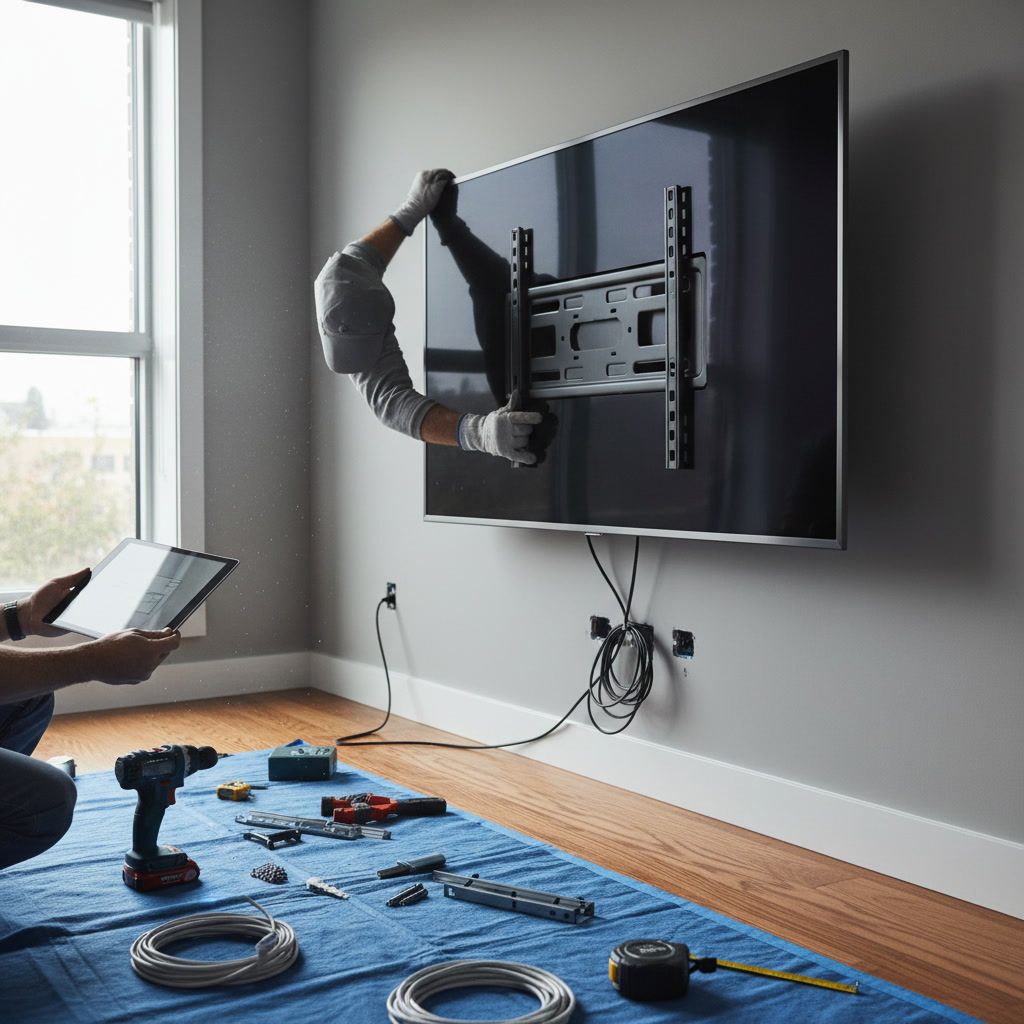
First, they mount the display at the optimal viewing height, using studs or appropriate anchors for the wall type. TV mounting requires precise measurements because even a few inches off-center becomes obvious in smaller rooms.
Next comes speaker installation. In-ceiling or in-wall speakers require cutting openings at exact locations, routing wires, and securing speaker frames. Bookshelf or tower speakers get positioned for proper stereo imaging or surround effects. Subwoofers go where they produce smooth bass response without overwhelming neighbors.
The installer then mounts and connects source equipment like receivers, amplifiers, media players, and gaming consoles. These components typically go in an equipment rack or cabinet with proper ventilation. Heat buildup shortens component life, so professional installers leave adequate spacing and may add cooling fans.
Network Integration and Smart Home Connectivity
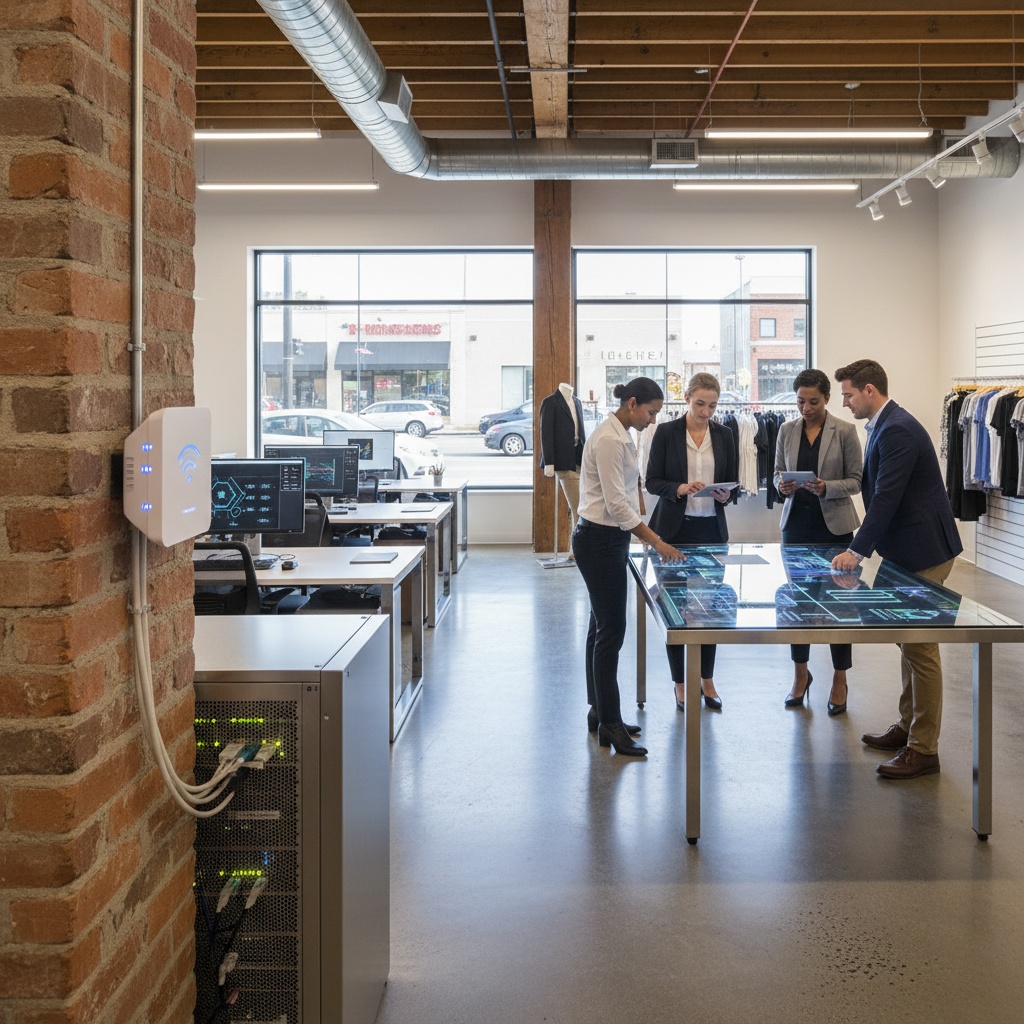
Modern entertainment systems rely on robust network connections for streaming, software updates, and remote control. The installer connects equipment to your home network, either via ethernet cables or optimized WiFi. They configure network settings, assign static IP addresses where appropriate, and verify sufficient bandwidth.
If your network struggles with multiple 4K streams or gaming traffic, the installer can recommend upgrades. Enhanced WiFi solutions using mesh systems or additional access points eliminate dead zones and buffering issues.
Integration with smart home systems happens at this stage too. Your entertainment system can respond to voice commands, turn on when you arrive home, or automatically adjust lighting and shades when you start a movie. These automations require programming the control system to communicate with various platforms.
System Calibration and Audio Tuning
Raw equipment installation only gets you halfway. Professional calibration extracts maximum performance from your investment. For displays, this means adjusting brightness, contrast, color temperature, and motion processing to match your room’s lighting conditions and personal preferences.
Audio calibration goes deeper. The installer uses measurement microphones and analysis software to set speaker levels, delays, and crossover points. This compensates for room acoustics, ensuring dialogue clarity and balanced frequency response. A properly calibrated system sounds dramatically better than factory default settings, especially in rooms with challenging acoustics like vaulted ceilings or hard surfaces.
One expert insight: the most common calibration mistake involves setting the subwoofer too loud. Most people think more bass equals better sound, but accurate bass reproduction means you feel it during action scenes without it overwhelming dialogue or music. Professional calibration finds that perfect balance using objective measurements rather than subjective guessing.
Control System Programming and User Interface Setup
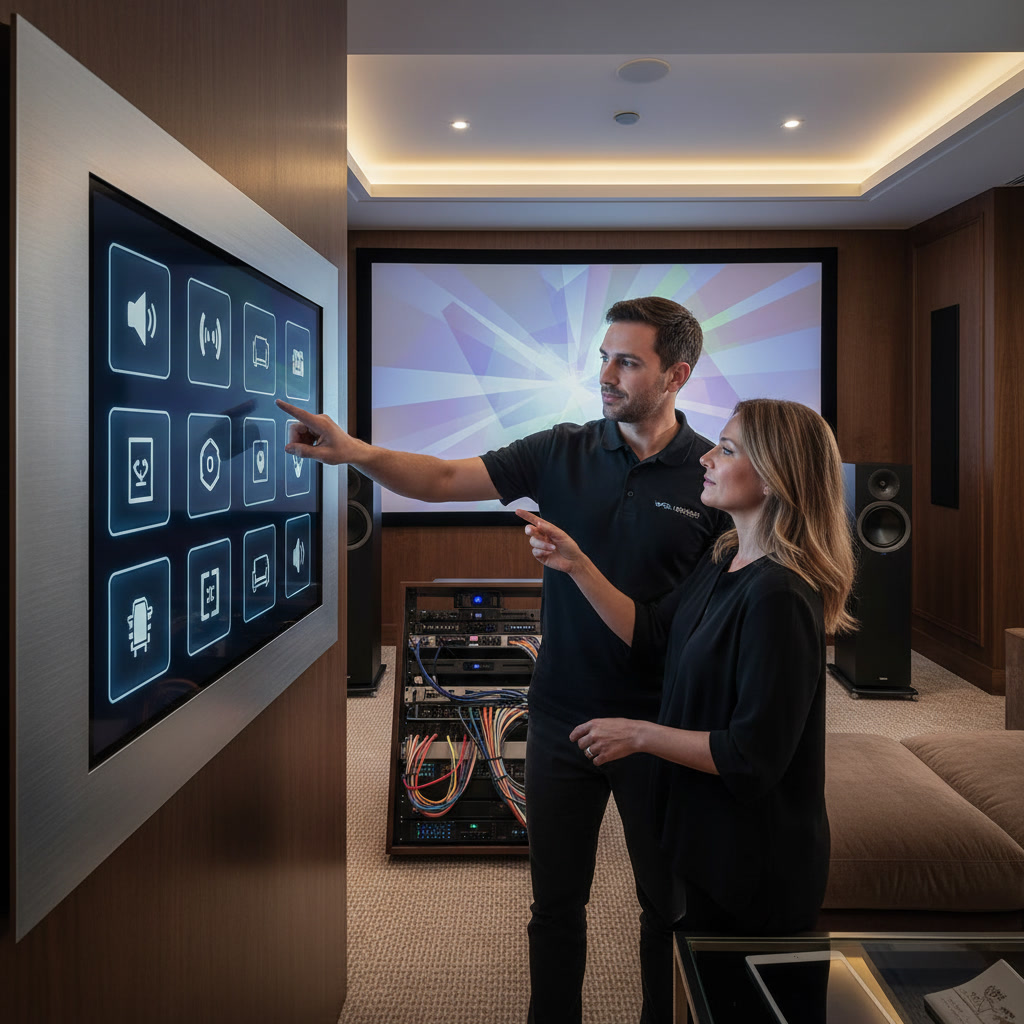
Complex systems with multiple sources, zones, and automation require thoughtful control programming. The installer configures universal remotes, touchscreen panels, or smartphone apps so you can operate everything intuitively. Good programming hides complexity behind simple buttons like “Watch Movie” or “Listen to Music” that trigger multiple actions simultaneously.
The control interface should match your technical comfort level. Some clients want access to every adjustment, while others prefer simplified controls with just a few options. The installer creates custom pages, labels, and button layouts that make sense for your family. They also set up user accounts with appropriate permissions if kids need restricted access.
Testing and Quality Assurance
Before considering the job complete, the installer tests every function multiple times. They verify all video sources display correctly, check audio from each speaker, confirm network streaming works reliably, and test automated sequences. They look for interference, ground loops, HDMI handshake issues, or other technical problems that might not be obvious during casual use.
This testing phase catches problems while the installer is still on site with tools and spare parts. It saves you from discovering issues later when getting support becomes more difficult. Reputable companies like Pro Home Entertainment LLC thoroughly document system configuration and test results, creating a baseline for future troubleshooting if needed.
Client Training and Documentation
The best system in the world creates frustration if you cannot operate it confidently. Professional installers spend significant time training you on daily operations, troubleshooting simple issues, and accessing advanced features when needed. They demonstrate multiple scenarios, answer questions, and provide written guides or video tutorials you can reference later.
Documentation should include equipment manuals, warranty information, network passwords, system diagrams showing what connects where, and contact information for support. Some installers create laminated quick-reference cards that stay near the remote, showing the most common operations at a glance.
Your Next Steps Toward an Exceptional Entertainment Experience
Professional installation transforms how you experience movies, music, gaming, and sports at home. The process requires expertise, planning, and attention to detail that ensures years of reliable performance. Whether you want a simple audio upgrade or a complete home theater, working with experienced professionals delivers results that exceed DIY attempts.
Pro Home Entertainment LLC brings years of expertise to projects throughout the Phoenix metropolitan area, from Scottsdale to Goodyear. Our team handles every phase of installation with precision and care, ensuring your new entertainment system performs flawlessly from day one. Ready to start planning your project? Call +12068194038 to schedule your consultation and discover what professional installation can do for your home.